Despite the world population reaching 7 billion, the slow down in the world economy and the resultant tightening of fiscal and monetary policy, it is suggested by the Economist that agricultural prices may fall in the coming year but will remain at historically high levels affecting inflation and the price we pay for putting the rice, buhobe, pasta, couscous or tatties on our plates. The Economist suggests agricultural commodity prices may fall on average by a weather-dependant 11%.
We hear of bio-fuels being grown instead of staples with accompanying climate change and concerns over greenhouse gas linked to increased and unnecessary transportation as well as worrying deficits in the supply of staples. This enthusiastic promotion of agri-business leads to a continuing decline in arable land, and not only due to increased urbanization. However, bumper harvests of wheat in Asia will ensure a plentiful supply. Fast-food is apparently making wheat almost as popular as rice in some of these emerging markets.
With us here in Zambia there will be a small fall in the price of maize, a bumper harvest last year and a complaints of a poor domestic price will see many Zambian commercial farmers moving from maize to soya, mainly to meet the demand for cooking oil, soya food and stockfeed. A domestic staple here in Zambia but elsewhere in the world, maize meets the demand for livestockfeed and ethanol to dilute petrol. This recalls Dr Johnson’s definition of oats. A grain which in England is given to horses but in Scotland supports the population and Lord Elibank’s riposte: and where will you find such (good) horses and people.
A recent report from the Scottish Agricultural College (Power in Agriculture) shows the UK imports 11% of the total amount of poultry traded - not exactly chickenfeed! America leads on beef and is the biggest wheat exporter while Japan imports most wheat. In the past North America and Europe generally controlled food trade, but this is changing. The Russian, Chinese and Indian governments want to protect their own smaller-scale and often subsistence producers by offering more stable prices.
As regards Europe the Common Agriculture Policy, the lack of raw materials for energy, fertilizer and, indeed, the shortage of land and water, make it impossible for Europe to feed itself without significant changes in productivity, efficiency and investment in new technology. This brings to the fore genetically-modified crops, and the role of the agri-business giants.
The US, Britain France and Germany still headquarter most of world's agri-business giants. There's Unilever, for instance, with the third biggest turnover of the world's food - nearly US$60bn in 2008. Kraft & Cadbury recently joined forces. There's Tesco as the world's second biggest retailer by turnover, but a long way behind Walmart, US-based owner of Asda and much besides. The Indian retail market not surprisingly is uneasy about ‘liberalising’ and opening up to such international companies.
The report also estimates that only 10 companies are responsible for more than 40% of the global retail market, four companies control 75-90% of global grain trade, seven companies control virtually all fertiliser supply, five companies have more than two-thirds of the world's agro-chemical market, and only three companies control nearly half of the proprietary seeds market.
But by being exposed to these few transnational companies for inputs and for markets, it makes farmers everywhere all the more vulnerable and dependant. A balance needs to be struck between those companies who have great lobbying power and the interests of farmer producers and of consumers. Our spending choices as consumers are important as it is we consumers that give these companies their market power, but their overwhelming power and position in the market place are such that in many cases, our power of as consumers and our choice are diminished. This too is the case with farmer-producers.
In contradistinction to the food and farming business in the more developed world the FAO and the European Union have recently announced a project aimed at helping Malawi, Vietnam and Zambia take a more "climate-smart" approach to their agriculture.
A majority of the population of these counties depend on agriculture for their livelihoods and food security. They are highly vulnerable to the impact of climate change. At the same time agriculture is a significant producer of greenhouse gases and contributes to global warming. "Climate-smart agriculture" is an approach that seeks to use promote and expand good climate-smart practice in subsistence agriculture itself as a solution to these challenges they are facing.
The project involves making changes in farming to fight against hunger and poverty and becoming more flexible in responding to climate change by reducing emissions; and increasing agriculture's potential to capture and use atmospheric carbon.
The EU/FAO project will integrate national climate change patterns with agricultural strategies to identify areas for climate-smart agriculture investments. They want to build capacity for planning and implementing climate-smart projects capable of attracting international investments and supporting crop diversity.
The problems of climate change are increasingly being felt on the ground, for example here in Mwandi the rainfall pattern this year again is irregular and erratic and the temperatures too are higher than normal. Actions to address these problems are needed, even as international negotiations continue in the search for a global climate agreement.
We are grateful too for the Guild with its support through New Hunger programme. An increasing number of patients and children in the hospital are showing signs of malnutrition as food runs out in the rural areas. The people here in Sesheke District suffer from chronic food shortage. Over one third of our children are chronically malnourished.
There are a number of NGOs who supply humanitarian assistance but there is need to address systematically local food-security. There are a number of Church-led initiatives in this area. In the meantime we continue to supply the beans, the HEPS and other foods suited to the person’s needs.
Wednesday, 18 January 2012

Wednesday, 28 December 2011
The search of nuclear man
In Henri Nouwen’s ‘The Wounded Healer’, Nouwen looks at ministry in a dislocated and fragmented world and at nuclear man’s [he apologises for the male-dominated language] loss of faith in technology. In technology’s power to create new life also lies the potential for self-destruction by nuclear or chemical warfare or by pollution and contamination. Nuclear man can not only destroy life but also the possibility of rebirth. It is into this situation in the Zambian uranium mining industry that the Council of Churches of Zambia is speaking.
Earlier this month Council of Churches in Zambia (CCZ) published its draft policy on uranium mining in Zambia suggesting how Zambia might use best practices from elsewhere to regulate its exploration, mining, processing, marketing and transportation and thereby establish a transparent, well- functioning and balanced uranium mining industry in Zambia.
The mining industry plays a crucial role in the Zambian economy and it is the recent boom there that moved Zambia from least developed to supposedly lower middle-income status according to the World Bank earlier this year.
An area of concern for many people here is the multinational-controlled uranium mining companies that have recently acquired uranium exploration concessions.
In order to protect people, the flora and fauna and the environment the report recommends training for those regulating the industry and for those monitoring the health of workers in the uranium industry.
There is a need to provide sustainable livelihoods that do not threaten the well-being of the workers or the people living in the area but these jobs should contribute to genuine poverty eradication through being economically sustainable. While uranium exploitation can bring benefits to communities in job creation, foreign exchange earnings and overall economic growth, there is also a need to protect lives and the environment.
Uranium is hazardous in water, food and air that we all drink, eat and breathe, to say nothing about its controversial use as a fuel for energy or the other immoral uses it is put to in weaponry.
The Report advocates better conditions of service for the local workers, and urges investors to use their social corporate responsibility to benefit the people in the areas they operate in and to do so but not just out of guilt, because of the considerable profits they were making.
CCZ Secretary General, Rev Suzanne Matale, said the Church, as the body of Christ, was concerned that the people to whom God had given the resources were being short-changed. She believed that the Church had a God-given mandate to be stewards of the earth, take care of one another and ensure life in abundance for all. CCZ was not against investment, but wanted to ensure that locals lived in a safe environment and benefited from the investment.
Reverend Matale said CCZ had commissioned a study on uranium mining in Zambia in early 2010 and that the findings of that study were published in a report, Prosperity unto Death: Is Zambia ready for Uranium mining? This can be googled
Rev Matale said for the Church there was no better way to preach the gospel than to act as a voice for the voiceless poor and clearly articulate their voices on issues that affected their livelihoods and put their lives in jeopardy, coupled with robbing them of their dignity.
"We believe that we have a God-given mandate to be stewards of the earth, to take care of one another and ensure life in abundance for all.” she said.
And on that uplifting note we wish you all the compliments of the season as we celebrate the Incarnation and look back with thanksgiving across the year which is passing from us now. May we in the words of Psalm 90, in the coming year, be taught to count our days and gain a wise heart. May the beauty of the Lord, Our God, be upon us and may he prosper and establish the work of our hands. Amen
Friday, 2 December 2011
Photos from World Aids Day
 |
| Choir with traditional Instruments |
 |
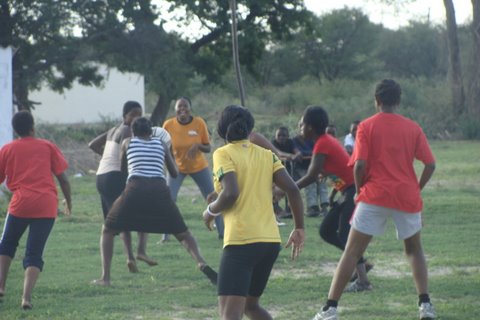
| Group of footballers Injectors (Hospital) were playing the Chalk breakers (Teachers) the Hospital won at football and the teachers won at Netball |
 |
| High school pupils Traditional Dancing |
 |
| Hosp staff and Teachers netball |
 |
| Little girl from Orphans and Vulnerable Children (OVC) Programme who later recited a poem |
 |
| March past of the Girls and Boys Brigade with the drums from Houston |
Tuesday, 29 November 2011
Doing More with Less
INTERNATIONAL AIDS DAY - Getting To Zero
Zero new infections, zero discrimination and zero Aids related deaths
(this year's theme)
 There is good news from a recent UNAIDS report released for World AIDS Day (1 Dec). www.unaids.org/en/resources/unaidspublication/2011/ New HIV infections and AIDS-related deaths continue to fall, and the number of people on treatment in the less developed world is almost 50 percent of those eligible. This has happened in spite of a decrease in finances.
Especially encouraging for us in Zambia is that access to HIV treatment has improved greatly in Sub-Saharan Africa (SSA), the region which has long been worst hit by the AIDS epidemic, making up some 68 percent or 22.9 million of all HIV-infected people.
Access to antiretroviral drugs (ARVs) has increased in SSA by 1/5 between 2009 and 2010 though 1.2m people still died of AIDS-related causes last year. Zambia has reported coverage levels of between 70 and 80 percent; nearing universal access (considered 80%).
The overall world statistics are encouraging too; while 2.7 million people contracted HIV in 2010. This represents a fall of over 1/5 since 1997.
6.6 million people are now accessing ARVs , an increase of 1.35 million in less than two years. With improved access to treatment, new HIV infections are also declining sharply.
It seems that ARVs play a role in reducing transmission of the virus to partners. Infection rates are 1/3 to ½ fewer than would have been the case without ARVs. This amounts to 2.5m people alive today who would not have otherwise been.
Changes in behaviour such as abstinence, condom-use and male circumcision are also contributing. Prevention of mother-to-child transmission is another success, where 400 000 new infections have been prevented.
To continue to do more with less, the UNAIDS Report suggests a 4- Goal Investment Framework to use funding more efficiently and effectively.
1.Maximise benefits of HIV Response
2.Use national epidemiology to ensure best allocation of resources
3.Implement programmes based on local context
4. Increase efficiency in prevention treatment care and support
This new approach in funding could prevent some 12.2 million new infections - including 1.9 million children, and 7.4 million AIDS-related deaths between now and 2020 says the report.
For universal access to HIV prevention, treatment, care and support by 2015, an estimated US$22-$24 billion annually is required.
In the past two years donor funding has been cut by 10 percent from $7.6 billion in 2009 to $6.9 billion in 2010.
Without stable funding, opportunities to prevent new infections will be missed and there is a risk that the progress gained in the fight against HIV could be lost.
Our Aids Relief Programme at the Mission Hospital here in Mwandi continues with its static clinic based here at the hospital and the 6 mobile outreach clinics. The outreach is now undertaken weekly. There are 1478 people on ART, 164 of whom are children.
We are grateful to many people for being able to look after our clients in many different ways. Starting at the top we have PEPFAR and AIDS Relief with the funding and other structural and logistical support. On the ground here we have a number of Church Partners who help such as IPC with reagents, Aiken and Goldsboro and other individuals for their contribution to the Formula Programme. There are over 250 children alive today who benefited from this programme that uses WHO guide-lines. The Church of Scotland Guild ’s Food Support programme that brings nutritional support to the Hospital and Home-based Care programmes. There are numerous churches and visitors who by buying bags and craft items made by the Mothers’ Support Group give this group a small but steady income throughout the year.
This year in Mwandi the Community will meet as usual on AIDS Day Eve for a candle-lit service in memory of those who are no longer with us and who have been lost to HIV/AIDS. At the service we will have a large number or Orphans and Vulnerable Children, a visible legacy and testimony to the destruction caused to ordinary families by this appalling pandemic. It is a sad and moving occasion but also one of joy and hope in the presence of these children.
The next day, AIDS Day, there will be a march through the village, an all-age gathering for some speeches, songs and drama; a Fun-Run and Football Match are the sporting events planned.
Zero new infections, zero discrimination and zero Aids related deaths
(this year's theme)

Especially encouraging for us in Zambia is that access to HIV treatment has improved greatly in Sub-Saharan Africa (SSA), the region which has long been worst hit by the AIDS epidemic, making up some 68 percent or 22.9 million of all HIV-infected people.
Access to antiretroviral drugs (ARVs) has increased in SSA by 1/5 between 2009 and 2010 though 1.2m people still died of AIDS-related causes last year. Zambia has reported coverage levels of between 70 and 80 percent; nearing universal access (considered 80%).
The overall world statistics are encouraging too; while 2.7 million people contracted HIV in 2010. This represents a fall of over 1/5 since 1997.
6.6 million people are now accessing ARVs , an increase of 1.35 million in less than two years. With improved access to treatment, new HIV infections are also declining sharply.
It seems that ARVs play a role in reducing transmission of the virus to partners. Infection rates are 1/3 to ½ fewer than would have been the case without ARVs. This amounts to 2.5m people alive today who would not have otherwise been.
Changes in behaviour such as abstinence, condom-use and male circumcision are also contributing. Prevention of mother-to-child transmission is another success, where 400 000 new infections have been prevented.
To continue to do more with less, the UNAIDS Report suggests a 4- Goal Investment Framework to use funding more efficiently and effectively.
1.Maximise benefits of HIV Response
2.Use national epidemiology to ensure best allocation of resources
3.Implement programmes based on local context
4. Increase efficiency in prevention treatment care and support
This new approach in funding could prevent some 12.2 million new infections - including 1.9 million children, and 7.4 million AIDS-related deaths between now and 2020 says the report.
For universal access to HIV prevention, treatment, care and support by 2015, an estimated US$22-$24 billion annually is required.
In the past two years donor funding has been cut by 10 percent from $7.6 billion in 2009 to $6.9 billion in 2010.
Without stable funding, opportunities to prevent new infections will be missed and there is a risk that the progress gained in the fight against HIV could be lost.
Our Aids Relief Programme at the Mission Hospital here in Mwandi continues with its static clinic based here at the hospital and the 6 mobile outreach clinics. The outreach is now undertaken weekly. There are 1478 people on ART, 164 of whom are children.
We are grateful to many people for being able to look after our clients in many different ways. Starting at the top we have PEPFAR and AIDS Relief with the funding and other structural and logistical support. On the ground here we have a number of Church Partners who help such as IPC with reagents, Aiken and Goldsboro and other individuals for their contribution to the Formula Programme. There are over 250 children alive today who benefited from this programme that uses WHO guide-lines. The Church of Scotland Guild ’s Food Support programme that brings nutritional support to the Hospital and Home-based Care programmes. There are numerous churches and visitors who by buying bags and craft items made by the Mothers’ Support Group give this group a small but steady income throughout the year.
This year in Mwandi the Community will meet as usual on AIDS Day Eve for a candle-lit service in memory of those who are no longer with us and who have been lost to HIV/AIDS. At the service we will have a large number or Orphans and Vulnerable Children, a visible legacy and testimony to the destruction caused to ordinary families by this appalling pandemic. It is a sad and moving occasion but also one of joy and hope in the presence of these children.
The next day, AIDS Day, there will be a march through the village, an all-age gathering for some speeches, songs and drama; a Fun-Run and Football Match are the sporting events planned.
Tuesday, 15 November 2011
Dedication of the new church at Mabumbu
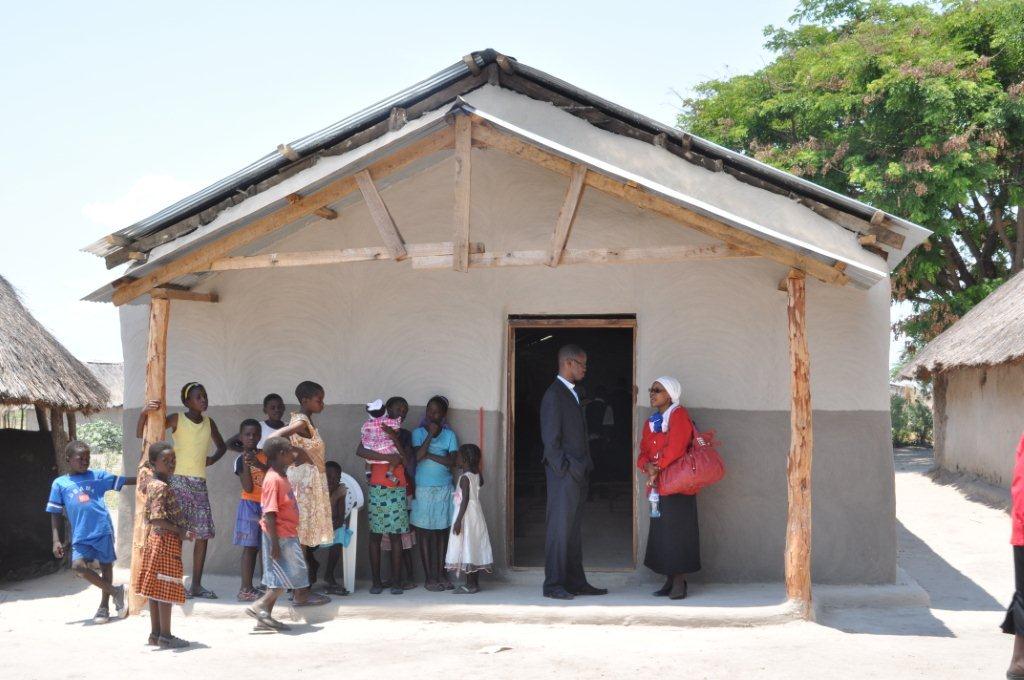
Mabumbu is about 30 minutes from Mwandi. The road is still easily passable, though sandy and dusty. The daytime temperatures are fierce, around 40C, at the moment, as we await the frontal rains from Congo. There have been the odd few spits and drops but that has been convectional. The trees have shot new green leaves in expectation of the coming rains and most people have prepared their fields for sowing. A few courageous individuals have even sown a ‘lima’ or two, gambling on the arrival of the rains in the next week or so. Mubita’s Aunt last week came to say good-bye to us as she was leaving the cattle and fishing camp at the river and returning home to Kakulwani to prepare her fields.
After leaving the tarred road the first major settlement is the village of Namango. It is a typical rural village with daub and wattle houses, thatched roofs and reed-fenced lapas and is situated in a sandy clearing, scattered with baobabs, local palms and other indigenous, deciduous trees that provide wild fruit and shade. Traditionally Namango was the village where our Senior Chief had his fields. At this time of year the Palace moved to Namango for the sowing and the fields were tended by his wife. In the middle of the village we passed the ‘lutaitai’ the special thatch shelter built for the Senior Chief to sit in on arrival and hear submissions from local people needing his help. The Chief stays in Namango at his Kwandu (residence) for a week during the sowing, but his wife will stay longer if required. At Namongo there is also a full Kuta (Court) with its own Indunas.
The party from Mwandi arrived at Mabumbu to a warm welcome from the excited congregation. A beautiful and well-built daub and wattle sanctuary and vestry had been constructed and roofed by 70 zinc corrugated sheets. It had been completed in September taking about 12 months to build; the rafters costing K1.6m and the roofing sheets K4.2m (around GBP800/US$1200). The PC(USA) Church in Albemarle helped with the purchase of the sheets, and were thanked and remembered in prayer. The former thatched Church is being retained as a Church Hall. Future plans include the purchase of a new Communion Table and more congregational benches.

There was a certain familiarity to the Dedication Service as it followed the Scottish Common Order to a great extent with the Opening of the Doors and ‘Ye Gates’ from Psalm 24 to begin with, then the Offering of the Keys. The prayers and readings were shared out amongst the eldership and Consistory visitors including us.
 After the Dedication of the Church and its furnishings we moved on to the Proclamation, Scripture Reading and the Sermon based on Matthew 21:12-17, concerning the cleansing of the Temple by Jesus. Rev Manda said while it was important to keep the Church building clean, sweeping out the dirt and re-arranging the furniture was not enough, God’s House is to be a House of Prayer for all, not a den of thieves, we were not in Church to be in business for ourselves. Our bodies as Temples of the Holy Spirit needed to be kept clean too, so that all who entered the new building would be blessed. In other words our business as a Church is outreach to others.
After the Restoration of a Backslider we moved into Holy Communion, served in the French way in a horse-shoe formation round the Table. This was followed by the closing hymn and Benediction.
Monday, 31 October 2011
Matters of Life and Death
Banji ni lumbu, kuilu ni ku mundi (This world is a cattle camp, the homestead is in heaven.)
This old Lozi proverb emphasises the transience of life and demonstrates that is a universal theme. The ephemeral nature of human life on Earth with our short entry into and exit from this world is a matter all cultures seem to try to come to terms with.
A cattle camp is a group of temporary wooden and grass shelters built on seasonal pastures. The herdsmen live there while they are looking after the cattle. The closest Scottish rural equivalent from yesteryear would be the ‘bothy’. At the moment there are many of these camps at the riverside around Mwandi as the cattle graze on the islands and floodplains. With the onset of the rains these ‘bothies’ will shortly be abandoned and the herds and herdmen will return to the village or homestead -the permanent settlement. It is this transhumance that is being compared to dying person leaving this world for an eternity in heaven.
On Wednesday evening we received news that Rev Manyando’s father had passed away in Mongu. Rev Manyando is one of our Livingstone Ministers. His father, Mr Green Sitali Manyando, was a former teacher, a former Council Chairman for the District and Village Headman. He was 80 years of age and had been ill for the last 8 months. So on Thursday lunch-time we set off for the Manyando homestead in rural Bulozi, at Litoya, about half-way between Mongu and Senanga. Rev Manda, Getrude Kambole, the Consistory Secretary, Ida, Keith and Mubita were the Mwandi Representatives. We picked up Rev and Mrs Nyambe in Sesheke and drove up the back road, reaching the pontoon in good time and then visiting the manse in Senanga. We finally arrived at Litoya at around 2200h.
We were welcomed into a dim and crowded lapa. (courtyard surrounded by reeds). As is the Zambian custom, a substantial marquee, made from a large tarpaulin, had been erected in the yard, and in front of it, the usual three-logged campfire was burning. The sofas and armchairs and any other extra seats from the home or borrowed from neighbours were placed outside for the use of visitors, mourners and those coming to pay condolences.
The lapa, at this time, is traditionally split into male and female areas. The men generally sit on the seats under the tent and the ladies in chitenges, legs straight and out-stretched on reed floor-mats. On arrival at the mourning-house (Zambian-English: the dead person’s home) you are expected to shake hands with all present, then enter the main house where the widow and her entourage of female relatives and neighbours are again sitting on mats. There you shake hands and express your sorrow and this is the time for tears. If the bereaved are Christian, you may be asked to offer a prayer of consolation here. You then return outside and sit with the other visitors who have also come to express solidarity with the family in their time of grief. You may now chat and discuss lighter matters with the people around you.
We were offered some of those ubiquitous white plastic garden chairs in front of the main house and a wooden coffee table was placed in our midst. A daughter of the house brought water, soap and a towel to wash our hands before eating. Then we were offered chunks of stewed beef and liver cooked in gravy and buhobe ( thick mealie-meal porridge). Eaten with your fingers, this was most welcome after our day’s journey. Cool drinking water is always served after eating. It is a breach of etiquette to drink with your meal as Europeans would tend to do.
It was exceptionally atmospheric after eating to sit and look up at a clear night sky with its tiny electric blue spangles of glittering stars in their constellations, smell the whiffs of woodsmoke and listen to singing of hymns and choruses accompanied too by the rhythmic cadences of the drumming of youngsters from the Church choir.
Most people wrapped themselves in blankets or chitenges and settled down to sleep after midnight, others kept watch and dozed on and off throughout the night. The night-time temperature at this time of year does not fall below the mid-20s Centigrade. We three were very kindly given the privacy of an igloo-tent pitched in the lapa; inside too was the luxury of a mattress. Our middle-aged bones are no longer as good as they once were for sleeping directly on the ground! Incidentally we used our bath-towels as bedding and were perfectly comfortable.
By 0530h next morning most people were up and about. And the choir had started to sing again. Hot water was being prepared and lugged to the ablutions for visitors to wash themselves. Again kind neighbours put their toilets and bathrooms at the disposal of visitors at the mourning-house. We bathed en famille at the neighbour’s bathing area, a reed-screened rectangle with a plank to keep your feet off the sand and an old maize sack served as the bathmat. Buckets of hot and cold water, an empty basin and jug were available to make a simple shower.
After washing and dressing, a breakfast of bread, marge and cocoa was served in the main house. In the corner stood a magnificent polished wood coffin with two pictures of Mr Manyando, one as a young man and the other just before he died. After breakfast we were presented with a printed burial programme, as other members of the family and dignitories kept arriving. There were representatives from the Government including the Lady Mayor of Mongu and the Barotse Royal Establishment. During this time the choir and the congregation gathered in the lapa and sang hymns and choruses.
The main Church Service started at 0930h after the arrival of the Presbytery Bishop, Rev Sipalo from Mongu. The Funeral Service followed the Lozi Liturgy with Hymns, Scripture Readings, a short Sermon, Prayers and a Blessing. I was asked to read Job 1:17-22 and Philippians 4:12-13 in Silozi. This is what brought me to ruminate about the transient nature of life and think about the Lozi perspective on this.
At the end of the service is the body-viewing. This is when all present take leave and say farewell to the deceased. It is the Lozi custom that one should be self-controlled in the Church during the funeral service with no noisy outbursts of emotion but it is permitted to grieve freely at the body-viewing. If you cannot contain yourself in Church, you go outside till you have composed yourself then return. Once everyone had filed passed the body the coffin was closed and the bearers carried it to the burial site. Normally this would be the local cemetery.
However, as the founder of the village Mr Manyando was buried next to the special tree in the middle of his village. The Headman’s house is usually about a dozen paces to the east of that tree. This tree symbolizes the existence of that particular village and its people. The area “under the tree” as it is called, serves as a meeting place to resolve disputes. Traditionally too the tree serves as the village shrine and the founder is buried in an unmarked grave at its foot. The dead body next to the living tree is a symbol of the continuing interaction between life and death and the area where the living commune with ancestral spirits when necessary. The village headman is the go-between. It was interesting to witness, to our eyes, this example of animism and syncretism.
Talking about graves I recently learned a new idiom. When Mr Kapui from Kandiana died a few months ago, I asked Julius if he could arrange for some young men ‘kuyepa libita’ literally ‘to dig the grave’. Now to the Lozi ear that sounds incredibly direct, harsh and callous, they use the euphemism ‘kulukisa ndu ya mutu’ literally ‘to prepare the person’s house’.
The congregation gathered round the grave and again the choir sang. The coffin was lowered into the grave and some sticks as tradition dictates were thrown in as well. Mourners may also come at this stage with a handful of earth and throw it in the grave.
If you are unable to go to the grave a young man will circulate with a shovelful of earth that you may touch instead. The young males of the family continue to shovel in the earth, often spelling each other and taking turns on the shovels, until there is a rather untidy heap on top. However, the four corners of the grave are marked with sticks.
The female relatives then come out and ‘pat the grave’. They use their hands to make a truncated rectangular pyramid. When that is done people present at the graveside; family, colleagues and visiting dignitories are called out in order of precedence to place flowers on the grave. These are provided by the family. You take the flower, go to the grave, kneel, stick in the flower and then say a prayer of thanksgiving. There appears little concern here regarding “Prayers for the Dead” that seemed to exercise many of the reformed persuasion in the past!
Then came the eulogies. There were speeches from the Local Authority and the Barotse Royal Establishment then a male family member gave a short biographical life-history of Mr Manyando and thanked all who attended for their care and support. The Minister closed the proceedings with The Grace and Benediction. Visitors then proceeded back to the home to say farewell to the family and set off on their way home.
Visiting a Lozi cemetery comes as a bit of a shock to Europeans who are used to carefully manicured and tended graves with lawns, flowers, shrubs and individual stone gravestones. These you will find in the urban areas of Zambia but not in the rural areas. Mwandi is a typical rural example. Wild, natural and unkempt rural cemeteries tend to be found to the west of the village roughly a mile away from the village centre. Traditionally the bush starts here and the graveyard is found right on the border between the village and the bush and so those who die are buried near to their living relatives. That is why so many bodies are brought home to Mwandi at great expense from all over Zambia to be buried here.
A Lozi village is a shelter for both the living and the dead and animistic belief says they should be able to communicate with each other. The graves are a clear demarcation of where the village begins and where it ends. To some extent you could say the living are placed between the dead at the shrine and the dead at the cemetery. The fact that you have the dead so close to the living perhaps makes death something less to be feared by the living and more recognizably a process on the journey to heaven as the Lozi have traditionally seen life as a metaphorical journey to a heavenly paradise called Litooma .
Tuesday, 25 October 2011
TEEZ
Last week we had a visit from a team from TEEZ (Theological Education by Extention in Zambia) who ran a three-day Tutor Course for 18 Church members from Mwandi Consistory, at the Church. This had been arranged by our Minister, Rev Wezi Manda.
TEEZ is an ecumenical project which came into existence in 1979 based at the Mindolo Ecumenical Foundation Campus. Its main function is to equip Church members in socially relevant and biblically–based coursework to better serve the Church. “To prepare all God’s people for the work of Christian service….” Ephesians 4:12
Participating Churches are: African Methodist Episcopal Church, Anglican Church, Church of Central Africa Presbyterian, Community of Christ, Lutheran Evangelical Church, Reformed Church in Zambia, UCZ, Uniting Presbyterian Church of Southern Africa and United Methodist CChurch
Since it started, over 12 000 people have successfully completed courses and over 5000 tutors have been trained. The TEEZ courses are taught in a group by local tutors and this involves individual home-study, weekly group learning discussions and practical work.
The courses are available to anyone who needs them and subsidized so that they can be afforded by most people. Prisoners and rural women are provided with free courses as well.
TEEZ offers Basic Certificates in Church Ministry in the areas of Preaching, Counselling, Teaching, Worship and Leading Church Meetings in six different languages. For those with a stronger background in Bible and with Basic Certificates Advanced Certificates in Church Ministry are offered. Each course has 24 weekly lessons and covers the areas of the Gospels & Acts, Old Testament, the Epistles of Paul, Biblical Doctrine, Psalms and Bible Study and Church Administration.
A good time of learning and fellowship was enjoyed by those taking part in this useful and challenging course. It was well organised by capable and committed staff who willingly bring these courses to the rural areas as well. TEEZ is a Zambian organization belonging to Zambian Churches and is doing a commendable job. It is worthy of material and prayer support in order to help it carry out and expand its ministry.
The three members of staff, Rev Kangwa Mabuluki, Rev Banda and Rev Rebecca Jones who came are testimony again to how interconnected the Christian family is. The Director of TEEZ is Rev Kangwa Mabuluki. His son, Kapamba, was a student of ours and a classmate of our children at Chengelo. He is also a friend of Rev Alex Slorach, another family friend and former Zambian Missionary. Rev Rebecca Jones is from PC(USA) and is on a year’s secondment with TEEZ. There is a Mwandi posting on her blog at http://www.mapc.com/outreach/blogs/a-year-in-zambia/
 |
| The Mwandi tutor group (photo by Rebecca Jones) |
Subscribe to:
Posts (Atom)