Showing posts with label Church of Scotland. Show all posts

Wednesday, 15 August 2012

TURNING THE TIDE TOGETHER


XIX International AIDS Conference

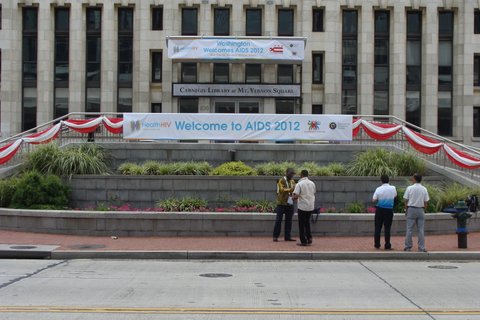
With over 20,000 other participants, Marjorie, Chrisie and Ida gathered in Washington at the XIX International AIDS Conference, for a series of meetings, speeches and other sessions which told of the challenges and successes, the questions and responses in both the lab and in the field. We should be proud that the Church of Scotland, as part of its Mission, has a programme that focuses on HIV prevention, that is working to end discrimination against HIV patients, and that advocates research and investment to make treatment available to all those who need it.

Sunday 22 & Monday 23 July 2012

The M&E Session before the opening was useful in showcasing a solar powered laptop, used for collecting and processing data in remote rural areas.

At the opening, we learned that Zambia’s infection rate has decreased and that more people are able to access ARVs than previously. These are new infections being treated and we are not just treating those waiting in the queue. Proper adherence should ensure people living with HIV can enjoy a more normal, fulfilling and longer quality of life.

Treatment is a form of prevention. This is especially true in the case of PMTCT. If all HIV+ mothers receive ARVs, then the risk of transmission to the child is minimal. Malawi has already gone down this road with good results (Option B+). Zambia is being encouraged by WHO to follow suit. In doing this, the 2015 goal mentioned at the faith-based conference should be reached.

Related to this, is the necessity to upscale our outreach to youth. Too many do not know their status, this is not helped by their exclusion from adult programmes. That is why, at Mwandi, our provision of a Youth-Friendly Corner (and the appointment of a Youth Co-ordinator) has been so important. It will continue to provide quality care, education, testing and easy access to ARVs, for this important segment of the population in the catchment area. Only through this, can stigma be addressed and help offered by peer educators.

The Food Security Session showed how hospitals can work closely with nutritionists to improve the diet of patients. The Nutrition Department prescribe donated food to patients based on their BMI.


However, a significant challenge to be faced is ‘leakage’, ie. the numbers tested and found positive amongst babies, children, youth and adults are far greater than those who actually commence treatment.

On the Sunday afternoon, a large crowd gathered near the Washington Monument as part of the Washington ‘Keep the Promise’ March. Andrew Young and Rev Al Sharpton gave inspiring speeches, setting the stage for some further introspection.

It was also good to see the AIDS Memorial Quilt, that was started by gay rights activists who wanted to make certain that their friends who had died of AIDS would not be forgotten. The quilt is now the largest community art project in the world, and is a poignant testimony to love, peace, and hope.  There are men, women and children from every continent, remembered in the panels. It is a wonderful and moving memorial to those who have died, but also a celebration of life.

Tuesday 24 July 2012

Hilary Clinton addressed the plenary session on Tuesday. The first item after that was entitled ‘Science to Public Health’, and discussed the tools necessary to end the epidemic. An AIDS-free generation was the ultimate goal. There was a moral responsibility to ensure this.

Tuesday also saw the opening of the Global Village, which is the focal point for science, medicine, civil society and the wider community. It is a noisy, vibrant and colourful area, with an eclectic array of fringe events and activities.


In the afternoon, an interesting session took place, on the critical and growing role of the faith community in treatment and advocacy, to increase the political will to fight AIDS locally, nationally and internationally. Access, dignity and inclusion are all part of our work for justice. Other meetings Ida attended dealt with developing community support and capacity, remuneration for Home-Based Care workers, and finally Prevention, which brought Tuesday to a close.

Wednesday 25 July

The Wednesday Plenary opened with research on the HIV vaccine and highlighted the effect of the epidemic on children, adolescents and women in particular. Women account for over half the 34 million people living with HIV worldwide, and the rate of infection is twice the male rate in Sub-Saharan Africa.

Ida spent a lot of time learning about finances and the efficient use of funding. She listened to DFID and Global Fund discuss the effect the present financial crisis was having on funding. Other areas of interest were scaling up PMTCT, and learning about the demand and supply side of pharmaceuticals. Ida was honoured to be able to speak about how policy-makers' decisions, and their implementation, affect people at the grassroots level.

Thursday 26 July

The plenary dealt with the dynamics of the epidemic, in particular, contexts with groups most vulnerable to infection, including sex-workers. Expanding testing and treatment, while at the same time ensuring greater adherence and prevention, were some of the approaches suggested. The Global Fund held more public sessions on:  political commitment, resources and pricing; a sub-Saharan session on the cancellation of Round 11 grants, and finally a meeting called "The Next Five Years", which outlined the strategic direction and future hopes.


Friday 27 July

The final day’s plenary was concerned with co-infections, including TB and other non-communicable diseases, such as heart disease, cancer and diabetes. We heard that the cost of treating a patient in Zambia is $200 per year. The closing session was addressed by a series of politicians and international worthies, and ended with a keynote address by Bill Clinton.

The XX International AIDS Conference (AIDS 2014) will convene in Melbourne 20-25 July 2014.

One especially memorable highlight for Ida was greeting Kenneth Kaunda on the escalator. He was going down as Ida was going up. We don’t know who was more surprised - Ida, seeing the First President, or Kenneth, being greeted by Ida so far away from home, in a Washington DC Conference Centre in the Lozi manner (Kukandalela)!

Ida Waddell and Marjorie Clark
Thanks to the Church of Scotland for their financial and logistical help to make attendance at this conference possible for Ida. Thanks, too, to her old friend, Megan. It was a good time of spiritual, personal and professional development. It was useful and enjoyable spending time with colleagues, and also meeting and speaking with other people from the diverse communities involved in the fight against the epidemic – science, advocacy, faith, politicians and vulnerable populations.

Tuesday, 15 November 2011

Dedication of the new church at Mabumbu

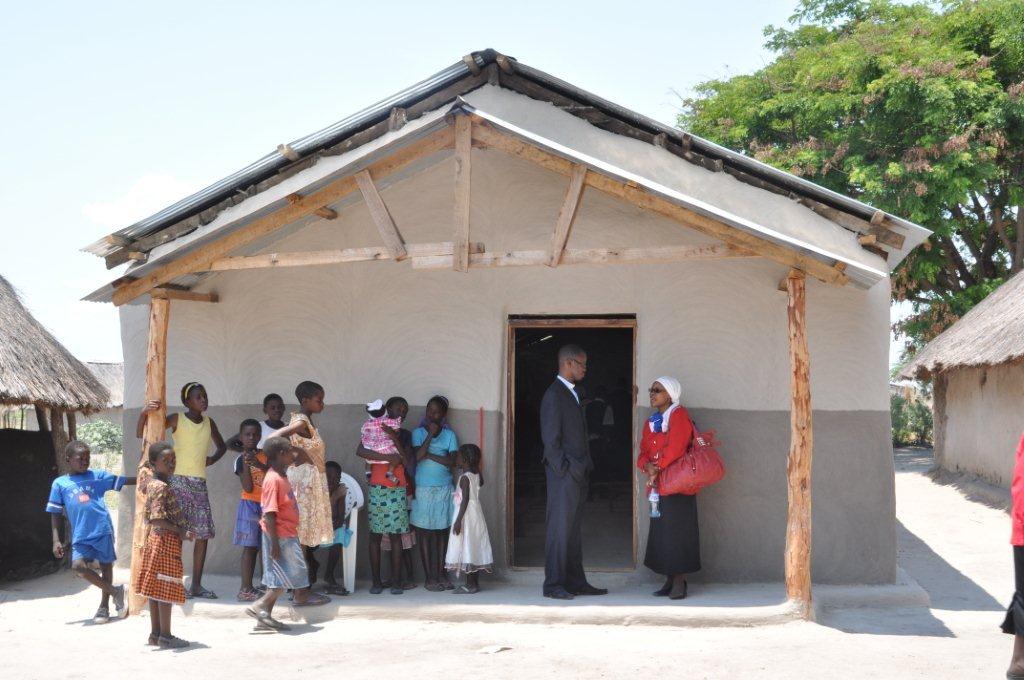
We were invited this Sunday to attend and take part in the Dedication Service for the new church at Mabumbu. I suppose we should be careful in using the word ‘new’. Mabumbu Congregation is a long-established church from Paris Mission times. Infact, Mabumbu meaning ‘the groves’, is named after an older Mabumbu to be found nearer Mongu.

Mabumbu is about 30 minutes from Mwandi. The road is still easily passable, though sandy and dusty. The daytime temperatures are fierce, around 40C, at the moment, as we await the frontal rains from Congo. There have been the odd few spits and drops but that has been convectional. The trees have shot new green leaves in expectation of the coming rains and most people have prepared their fields for sowing. A few courageous individuals have even sown a ‘lima’ or two, gambling on the arrival of the rains in the next week or so. Mubita’s Aunt last week came to say good-bye to us as she was leaving the cattle and fishing camp at the river and returning home to Kakulwani to prepare her fields.

After leaving the tarred road the first major settlement is the village of Namango. It is a typical rural village with daub and wattle houses, thatched roofs and reed-fenced lapas and is situated in a sandy clearing, scattered with baobabs, local palms and other indigenous, deciduous trees that provide wild fruit and shade. Traditionally Namango was the village where our Senior Chief had his fields. At this time of year the Palace moved to Namango for the sowing and the fields were tended by his wife. In the middle of the village we passed the ‘lutaitai’ the special thatch shelter built for the Senior Chief to sit in on arrival and hear submissions from local people needing his help. The Chief stays in Namango at his Kwandu (residence) for a week during the sowing, but his wife will stay longer if required. At Namongo there is also a full Kuta (Court) with its own Indunas.

The party from Mwandi arrived at Mabumbu to a warm welcome from the excited congregation. A beautiful and well-built daub and wattle sanctuary and vestry had been constructed and roofed by 70 zinc corrugated sheets. It had been completed in September taking about 12 months to build; the rafters costing K1.6m and the roofing sheets K4.2m (around GBP800/US$1200). The PC(USA) Church in Albemarle helped with the purchase of the sheets, and were thanked and remembered in prayer. The former thatched Church is being retained as a Church Hall. Future plans include the purchase of a new Communion Table and more congregational benches.

The Convenor, Lewis Banda, is supported by an Eldership of 8 men and women drawn from 3 Alume (MCF) and 15 Anamoyo (WCF). This lively and growing 215 member congregation is divided into 4 Sections and all live within a 10km of the Church. The Church is a focal point of the community and has a Sunday School attendance of around 48 most weeks and its Jericho Choir a membership of 18+.

There was a certain familiarity to the Dedication Service as it followed the Scottish Common Order to a great extent with the Opening of the Doors and ‘Ye Gates’ from Psalm 24 to begin with, then the Offering of the Keys. The prayers and readings were shared out amongst the eldership and Consistory visitors including us.

After the Dedication of the Church and its furnishings we moved on to the Proclamation, Scripture Reading and the Sermon based on Matthew 21:12-17, concerning the cleansing of the Temple by Jesus. Rev Manda said while it was important to keep the Church building clean, sweeping out the dirt and re-arranging the furniture was not enough, God’s House is to be a House of Prayer for all, not a den of thieves, we were not in Church to be in business for ourselves. Our bodies as Temples of the Holy Spirit needed to be kept clean too, so that all who entered the new building would be blessed. In other words our business as a Church is outreach to others.

After the Restoration of a Backslider we moved into Holy Communion, served in the French way in a horse-shoe formation round the Table. This was followed by the closing hymn and Benediction.

The Congregation gathered on reed mats under the trees in the Church yard to cook a bring-and-share lunch. The Rev and Mrs Manda, other Consistory visitors, the Uniting Church of Australia visitors and ourselves were served in the vestry. We enjoyed fried chicken, fish, gravy and buhobe. Outside the congregation cooked in their sections mainly reconstituted dried fish stew and mangambwa (pumpkin leaves cooked as greens). At the moment there is little grazing available so there was no mabisi (thick sour milk), only a small amount of fresh milk was available. Maheu from a plastic bucket was the drink on offer. Commercially-produced maheu and mabisi can be bought now in town for those urban Lozis pining for the rural food of their childhood. Maheu is made from left-over porridge to which water and flour is added and left overnight to make a refreshingly tart drink. Sugar can be stirred into it for those with a sweeter tooth.

Friday, 17 September 2010

On home ground again

We are at present limping our way to Livingstone on a very worn front tyre due to continued suspension problems and after having the problem supposedly rectified in Lusaka. We are to pick up Jennie Chinembiri and George Lind (of the Church of Scotland's World Mission Council) from the airport while doing various items of business for school, manse and hospital.

The Reverend Silishebo has demitted office after 8 years at Mwandi and has been called to the Chaplaincy at the University of Zambia in Lusaka; the Reverend Derek Lubasi who is presently at Coillard Memorial in Livingstone will be inducted shortly as our new minister. There is a flurry of activity cleaning, painting and renovating the manse to welcome the new ‘family’ (Lubasi means family in Silozi.)

We have just spent the past week-end doing another flitting! We have moved into Hippo House – bit of a misnomer as far as size is concerned but we are fortunate to enjoy running water and electricity (most of the time) utilities denied to a large majority of the Zambian population.

Some progress has been made with the house that the Church of Scotland funded with a grant, and that Nick designed and is building. The wooden flooring is being laid at the moment. We hope we can move in before Christmas.

We are beginning to pick up the threads of where we left off. On the first Sunday evening we got back was a very moving service for the sending out of the 10 young people back to their congregations. They had been attending a 4 month Mission Course at the Church run by Percy, the Youth Pastor. They had slept in tents, cooked for themselves and freely contributed their talents and labour to various ministries to be found at the Mission. They had also has their faith challenged and deepened, intellectually and academically too they had a substantial amount of reading and writing to tackle, not just of a theological nature either but also other work needing life skills.

We have had a good and useful couple of days with Jennie and George who were able to get a taste of what we do at the Hospital and School as well as the wider Church work we undertake here. We saw them off on Saturday to Kitwe and Lusaka.

We are now back to ‘auld claes and porridge’. Ida is back to work at the AIDS Relief Programme, she has done the first scrubbing for a Caesar and has been returned her keys and asked to tackle the Central Stores which was neglected in her absence. She is a Also working with the Consistory, helping to establish a home-based care programme.

As for me I have been allocated Grade 8C for Maths and Science and 10A for History. I am at present drafting a proposal to submit to a Church Aid for teacher housing at the High School. We are still putting the finishing touches to the second classroom block and student latrines which were not finished despite efforts on my part to ensure that things should continue in my absence.

Another exciting development hoving into view is the possibility of a Community School at Sikuzu. Sikuzu is a rural community about 8km downstream from Mwandi. The children are prevented from attending school at Mwandi until they can walk the return journey each day. They are usually 8 or 9 years before this happens. So a Grade 1-4 School will be a great boon for them. At present there is a UCZ Pre-school run from the Church.

Wednesday, 11 August 2010

Sturm und Drang in Vienna: Our diary

Saturday 17 July: The Multi-Faith Pre-Conference of the International Aids Conference met at the Technical University. The opening religious ceremony was excellent, with all the various faiths found in Vienna taking part. It was also good to see that WHO are giving due recognition to the work of faith-based institutions on the ground but sad to hear that PEPFAR have 'straightlined' their funding. Ida found it a good forum to raise two major concerns she had on the unsuitability of some of the paediatric ARVs and the lack of variety in comparison with adults. The pharmaceutical companies need to be lobbied on this issue. Returning to PEPFAR, if budgets continue to be reduced, then universal access will fall by the wayside and faith-based institutions will end up having to play God which is not their role. Those two points were picked up and used during the conference by more authorative speakers.

Sunday 18 July: The Opening of the Conference with the 18th Life Ball which was being held out of doors at the Rathaus was washed out by a tropical thunderstorm called Petra just as Whoopi Goldberg dressed as Mother Earth started to sing. The great and the good including Bill Clinton, Mette-Marit, the Crown Princess of Norway and various other prominent German-speaking politicians and celebrities rushed for cover including 50 black Promenade Dancers dressed in white and 50 white dancers dressed in black, while those in fancy dress including avatars, fauns, elves and pixies plunged into the fountains. Other prominent personalities present were Boris Becker, Patti Labelle, Prussian and Austrian Princesses plus the Mayors of Berlin and Vienna. Unsurprisingly, there were no Scottish peasants invited.

Monday 19 July: The first Plenary Session of the Conference and Bill Clinton's keynote speech was a highlight. Regarding funding Faith-based Institutions should lobby Congress to make the right choice by supporting, continuing and increasing funds for care, treatment, infrastructure and systems. Greater care and stewardship was also a pre-requisite for a dollar wasted puts a life at risk. Jobs need to be done faster, better and cheaper, in other words doing more with less. African governments need to keep their part of the bargain and devote at least 15% of their national budgets to Health Care. As regards prevention, scaling up should be done with what works. Large sums of money of money can be raised through small amounts given by many people. Education and advocacy are priorities.

Ida presented her poster entitled The United Church of Zambia Mwandi Mission Hospital Voluntary Counselling and Testing Strategy for Hard-to-Reach Populations. This dealt with a mobile outreach program that visited social events and rural and fishing settlements to increase the number of people who know their HIVstatus, so that they can access the HIV Programme before they are ready to start anti-retroviral treatment and become sick.

Tuesday 20 July: The main event was a peaceful but noisy demonstration through the streets of Central Vienna by 15 000 people on Tuesday evening to show solidarity with the campaign for human rights throughout the world and especially for those living with HIV and Aids. It also called on Governments around the world to increase funding for fighting the disease. An interesting fact: the Church of Scotland has given much more money to the worldwide fight against HIV and Aids than the Austrian Government, who to its shame gave a paltry single contribution of E1m to the Global Fund away back in 2002 for condoms for Africa..It was pointed out that the city of Vienna would be benefiting to the tune of E45m going into the local economy from hosting this conference alone. The Demo closed with a live concert given by Annie Lennox, the former Eurythmics singer, who is now the United Nations AIDS Goodwill Ambassador.

Wednesday 21 July: Marjorie Clark's Presentation of the Church of Scotland's HIV/AIDS Project at the Global Village. This was also another good opportunity for networking. Marjorie explained that the Church of Scotland”s Programme started in 2002 and its position was reiterated in 2006. It is to bring life and hope by breaking the silence on HIV and Aids and standing with partner Churches to offer practical support and to speak up for the voiceless, involving all Church members. This year the project becomes an integrated programme of the World Mission Council.

One of the most successful fundraising ventures had been Souper Sunday. Congregations had a simple soup and bread lunch after a Sunday Service in January. Last year over GBP100 000 was raised in this way from over 300 individual Churches. These congregations' generosity was a good example of many smaller sums of money adding up and together making a considerable amount. Mony a mickle maks a muckle.

Thursday 22 July: A good day for hearing about the new WHO PMTCT (Prevention of Mother-toChild Transmission) and Feeding Guidelines. The mothers will in the future be covered by ARVs until they stop breastfeeding. This will mean that more babies should be able to be breast-fed. This is a step in the right direction but in an ideal world all pregnant HIV+ mothers would be able to access long-term triple therapy anti-retrovirals.

The integration of palliative and home-based care at a workshop was another useful meeting and contacts made for future-training. This is an area that is lacking at present in Mwandi but steps are afoot to work at this through the Woman's Christian Fellowship in our 13 out-of-station preaching points.

Another interesting talk was given by a Dutch doctor based in Mozambique who has formed his ARV patients that default into cell-groups that help support each other, provide a form of mutual accountability and pick up ARVs for each other. This is a simple and effective way of cutting down waiting time in queues and transport costs for these patients. This can only happen with stable patients but is another good idea that can be adapted for use by the Mwandi Programme.

Friday 23 July: The closing day. The Global Village is being packed up but nonetheless excellent presentations on the maltreatment of prisoners living with HIV and Aids in Eastern Europe. It has been good to see how HIV and Aids affects other areas of the world and not just Africa.

We have also managed to visit Schoenbrunn Palace and the Spanish Riding School. Keith Catriona and Mubita also toured the Zoo, went to a Gustav Klimt Exhibition and did a cycle-tour of the Wachau are where the imprisoned Richard the Lionheart was found by Blondel, the inconclusive Battle of Duerenstein between Napoleon and the Austro-Russian Coalition in 1809 and the Anti-Freeze in the White Wine Scandal of 80s.

On Saturday 24 July we set off by rail for Geneva via Zurich.

Wednesday, 21 July 2010

By car, train and plane

We (Ida, Keith, Catriona, and Mubita) left Edinburgh a week ago last Sunday on an overcast morning in a wee smirr of rain and drove down the A7 to Carlisle through the Borders; a trip we had last done in 1979! Our first night we were spending with friends from Zambia at Ulverston in the Lake District. Locally the road from the M6 to Barrow is called the 'cul de sac'.

Later that evening we went for a run, in the road traffic sense, along the side of Windermere. The Lake District is reminscent of some areas of the Highlands but it is surprisingly compact and a bit more manicured and overdeveloped than we are used to.

At the risk of sounding a 'here's tae us, wha's like us note here' or 'whaur's yer Willie Shakespeare noo?' (well, we did pass the MacDiarmid Memorial at Langholm on route after all!), but I don't think the Bard of Avon is standing on the platform at Stratford Station waiting for a train - any train to London! Stratford-upon-Avon is another cul de sac as far as the railway is concerned. We spent our second night there with my youngest brother's family. It was good to see them after four years. We had missed them on our previous furlough.

London and the Methodists
The next day we taxied to Warwick to catch the 0719h London train as we were due at Methodist House at 1030 on Tuesday to meet with a series people. Our Mission Partner appointment is an ecumenical one between the Church of Scotland and the Methodist Church and they help with our support.

An hour and a half saw us 'detraining' at Marylebone and after depositing the luggage at reception in Methodist House we then breakfasted on a croissant and coffee in Baker Street opposite Sherlock Holmes' flat. We next got Catriona safely installed in the queue for Madame Toussaud's and crossed the road to Methodist House for our first meetings where we were introduced to some people in the World Church Office.

It was good to meet with Jan Deakin with whom we had communicated extensively by email but without ever meeting. We then had the opportunity to share with Tom King, the Team Leader of the World Church Relationships, and we made a interesting connection there. Tom's son had worked at Beit Cure Paediatric Hospital in Lusaka with Allan Norris, a surgeon we got to know when he came to operate at Mwandi.

Jane Cullen, the Discernment and Selection Officer, was especially interested in how the linking of Mission Partners to Presbyteries worked in the Church of Scotland. The Methodists may be thinking of doing something similar with Mission Partners and their Districts.

George Luke from the Press Department interviewed us both about our life and work at Mwandi.

We finished off with a pizza lunch with Bunmi Olayisade, the Partnership Coordinator for Africa, a good time of fellowship and conversation covering amongst other things HIV Advocacy, African Politics and Women's Empowerment.

Berlin at Midnight
We then took the tube to Earl's Court to catch the airport bus to Gatwick. We arrived in good time and joined the good-natured queue at the bag drop-off counter, went through security, had supper and waited for our flight. It was delayed so we landed two hours late in a still sweltering Berlin at midnight. We managed a bus and two underground trains finally trundling our luggage the last 500 metres to our Hostel, where we relished the cool shower and drinks, despite the late hour, before retiring.

The tabloid newspaper headline in the hostel lobby exclaimed: 'WAS FÜR EINE HITZE!' - the German for 'COR WOTA SCORCHA!' I presume.

Thursday, 3 June 2010

Church of Scotland General Assembly

After seven days of meeting, the General Assembly closed on Wednesday last week. It was a good time listening to the debates and meeting up with friends from all over the country. As the Church continues to share and spread the Gospel throughout the world, it is amazing the diverse interests, concerns and needs that this brings to light as people speak and we hear often prophetically about passions shared or pain that we attempt to understand and address.

All this feedback and information is living proof of Paul's metaphor in Romans 12 that in Christ we form one body belonging to each other all with different gifts depending on the grace given us with the further development of that in 1 Cor 12 that we are made up of many parts and as a body there should be no division but we need to show equal concern for each other in each of our own joy, pain and sorrow.

Business started appropriately with the Scottish Bible Society and we heard how the Word of God shapes lives here and overseas, contributing to the work of the Church: we have a vested interest here as Ida's mother worked for the Bible Society for many years.

Friday was another interesting day with the 'Third Article Declaratory' being debated concerning parish-based ministry bringing the ordinances of religion to people nationwide. It was interesting and sobering in the World Mission Council Report to hear from minority-status Christians who suffer for the faith. There were deliverences to raise awareness of this amongst elected politicians from Holyrood, Westminister and Brussels. Another echo of 'If one part suffers........' This was also mirrored at home by the work of Crossreach which includes counselling, addiction help, assisting prisoner families and the care provided for the young the old and the infirm of all ages, - the frail and the rejected.

Morning Service at St Giles' Cathedral was followed later in the day by a special service marking the 450th Anniversary of the Scottish Reformation. A wonderful time of reflection on the influence of the reformation on education and on wider Scottish society. It was a medley of Psalms, Prayer and other Scripture cleverly interwoven with monologues, dramatisations and presentations on the theme.

The overall message similar to that delivered from George MacLeod celebrating the 400th and resonating from 16th century - A Reformed Church is forever to be reformed. In other words to make God alive and relevant for people today. Interesting too that there is no longer the same contraversy over the morality over the possession of nuclear weapons. The Church's position on them and Trident is thankfully unequivocally clear.

Monday was good with a report from the Children's Assembly, not just the future Church but part of the Church here and now. A reform of the Presbyteries is envisaged to make them more responsive and better able to deal with the changing needs of the Church. The Guild and their support of HIV and Aids at home and beyond. Ida spoke here wanting to raise awareness of the impact of HIV and AIDS locally at Mwandi and asking the Church to advocate on their behalf to continue to make a difference to the lives of many living people worldwide with this disease.

We heard the report from the Armed Forces Chaplains who look after the spiritual needs of members of the armed forces and their families wherever they are serving. Not an easy job. There is also need of a ministry for forces personnel once they retire to help them adjust back to civilian life again. Safeguarding children and other vulnerable people and the safe inclusion of sex offenders in Congregations came in the report 'For such is the Kingdom of Heaven.'

The Assembly closed on Wednesday with amongst others the Iona Community Board Report, again another area of personal interest to us, Ida's father helped to roof the Abbey just after the War. It was good to read of the good work being done countering sectarianism and working with young offenders.

Finally, another highlight for us was the address by Mona Siddiqui.

Looking back on all this, the Church at this Assembly has identified its task as not only to get out there and talk about Jesus but also to be someone to speak for the poor, those who are marginalised socially, politically, economically, educationally and medically and in doing this it needs to engage in effective advocacy in partnership with civil society and other faith communities.

Friday, 5 February 2010

Mene Mene Tekels and Parsins

Our first visitor each morning usually calls at around 7 hours. It is Julius, the cheery cook and purchaser from Kandiana, the old folks’ home. He comes with a list of what he wants to buy. Today it is dried fish. Fresh fish is not available at the moment. There is a two-month ban on catching over the breeding season. The dry fish will be simmered and reconstituted in water to make a stew. Onion, tomato and cabbage are needed to make a vegetable relish. A case of cooking oil for frying and a case of sugar, mostly used to sweeten tea and the cold nshima* and sour milk pudding that is regularly eaten are also on the list. Money for firewood was also requested and some money to buy some spare parts for his bicycle. Julius uses his bike to transport the maize, meal and all the other purchases. It is quite a work horse and has seen better days.

The Government allocates K2m per month to feed the residents GBP 285. There are approximately 7000 Kwacha to the Pound at the moment. That works out at 60p per day. The fish costs K100,000 about GBP15 and that does two meals for 16 people. The vegetables cost K70,000 around GBP10 and lasts the same length of time A case of cooking oil 12 x 750ml bottles and 20kg sugar costs around GBP30. That lasts about a month. Firewood costs K30,000 GBP5 for a scotch-cart load (sic). Generally two are needed each month. All cooking is done over an open fire.

The 16 residents, 12 men and 4 women, are looked after well in comparison to other destitute and vulnerable old people who are increasingly being left to ‘the care o the craws’ as HIV and Aids takes its toll on the traditional extended family care structure. The Church of Scotland helps by giving towards the salary of Catherine, a UCZ WCF member, who works as a more than full-time carer. Churches in Scotland and the US also contribute to giving the residents a monthly bag of necessities to top them up and allow them a bit of independence.

After signing for the money for today’s shopping list, Julius and Keith then make sure that the receipts from yesterday’s purchases match the list of requests and the account balances.

Yesterday, 20 ‘sacks’ of maize were bought for K1,100,000 and the Reverend Silishebo asked me to check this out with Julius. It is cheaper and better for the local economy at this time of year to buy maize and mill it at the hospital rather than buying commercially produced mealie-meal to make the staple - thick maize porridge called nshima* in Zambian English and buhobe in Silozi.

We entered the store-room and there was a chaotically untidy stack of bags of assorted sizes and colours, holding the purchased maize. I counted the ‘new’ bags and my heart sank as I counted only 13 ‘sacks’. There were two extremely long ones which would hold about 90kg each I guessed.

So before I tried again, I asked Julius if he knew what the total weight was? No, he replied, they used a bucket to measure, and he pointed to the old-fashioned galvanized ‘Oor Wullie’ bucket standing in the corner. This is the standard measure for maize in rural Zambia. These buckets are ubiquitous, most households still use one to lug water around in, so the bucket makes more sense to people here than stones, kilos or bushels. It is only Government officials and over-specific Westerners who bother about the exact mass of anything. Very few people have scales, Weights and Measures staff who check calibration are few and only found in the urban areas. Various sized containers are used to measure different things for sale. For example, tins are often used to sell beans and kapenta * like dried whitebait, tomatoes are bought by the crate and dried fish by the negotiable bundle! So there are conventional and socially-agreed standard measures and prices for most commodities on sale at the markets, but don’t expect scales or many pre-packed and priced goods from the stalls.

Some quick mental Arithmetic was required. There were 8 sacks holding 4 ½ buckets, 2 sacks holding 10 buckets each and 2 sacks of 3 buckets plus the sack of 3 buckets he had milled earlier this morning. This gave a total of 62 buckets. I then used long division - no calculator was available - to calculate the cost of a bucket. This is one of the few times I’ve needed to use this practically, after all the blood, sweat and tears spilled in Primary 6 & 7! The multiplying and dividing brought me back to all those Wheaton’s Arithmetic’s Social and Commercial Problems we ploughed through!

Anyway, it worked out that we paid almost K17,750 per bucket. We got discount apparently for a bulk order as the going rate at Mwandi Market is K20,000 per bucket.

And no, I still don’t know the weight of a bucket of maize because I don’t really need to know. A bucket of maize weighs a bucket of maize!

Friday, 22 January 2010

Lozi Names, Part 2

It is always good to read at the beginning of the year the list that Register House publishes of the most common children’s names in use in Scotland for the previous year. I thought, as a follow up to the original article on Lozi nomenclature from last year - (What's in a Name), it might be useful and interesting to list some of the more common Lozi names to be found in the Mwandi area with their meanings. As a class teacher marking the daily register I have come to recognise Mwandi family names.

Lozi names, the Siluyana ones, fall into two main categories, nouns and verbal constructions. Notulu and Amwalana, from the previous article, are two good examples. Most noun-type names consist of a prefix and a stem. If we split up the name “Mu-bita”. Mu (means a person) and ‘bita’ means to pass or wrestle, hence the meaning the passer-by or the wrestler, think of Jacob/Israel..

So all Lozi names have a meaning. Mukelabai (one born at a bad time), Muyunda( the peeper) and Sitali (one who came on a bad day) are good Mwandi examples.

Below is a list of some other more common names in Mwandi with their meanings.

Akabana (one who doesn’t rise ie. bedridden)

Akalemwa (one who can’t be seized)

Akeende (one who won’t go)

Alisinda (the reliable one)

Imataa (bad-tempered)

Inambao (lion)

Indala (famine)

Ingutu (well-wisher)

Kufekisa (to resemble)

Liboma (the smasher)

Likando/Manyando (sufferings)

Lisulo(royal hunting party)

Lubinda (stubborn)

Lutangu (a tale)

Masiye (orphan)

Mubiana (one who misses someone or something)

Mundia (one who deserts me)

Munjita (one who calls me)

Mukatimui (bad woman)

Mutafela (one who is finished)

Musowe (throw away)

Monde (born in the 1st quarter of the moon)

Mwangala (joy)

Naluca (f) (the wee one)

Nalukui (f) Ilukui (m) (fierce one)

Namakau (many hoes)

Namatama (big cheeks)

Namukolo (born in a canoe)

Nawa (good company)

Ngonda(peace)

Nyambe (God)

Mutondo (tree, medicine)

Sanana(pertaining to children)

Sianga (euphemism for crocodile)

Silishebo (one born during famine)

Simasiku (m) ,Namasiku & Nosiku (f) born at night

It is difficult to categorise Lozi names definitively but they can be arranged broadly and somewhat thematically. We can see many are concerned with the transience of life, its sufferings and the surrounding circumstances at the time of birth.

As all writers tend to say, by way of a cop out, this is not a comprehensive list, but is merely indicative and somewhat subjective, I know that I am bound to have caused local offence by some grave omissions but thankfully on this occasion the blog readership in Mwandi is mercifully small in number!

Friday, 15 January 2010

Week of Prayer for Christian Unity

You are witnesses of these things. (Luke 24:48)

This year’s theme was chosen in Scotland, in honour of the hundredth anniversary of the 1910 Edinburgh World Mission Conference. It is in answer to that conference’s theme "Witnessing to Christ today” that the above verse was chosen. Edinburgh 1910 really marked the start of the modern ecumenical movement.

The United Church of Zambia, like many of the other United and Uniting Churches worldwide, stems directly from this watershed conference. The London Missionary Society, the Church of Scotland Mission, the Union Church of the Copperbelt and the Copperbelt Free Churches came together in 1965 as the UCZ making their unity in Christ more visible.

In the Copperbelt, Christians from many different places went to work in the mining towns, and interdenominational worship began in both the African and European housing areas. The Church of Scotland, the Methodist Missionary Society, and the London Missionary Society were working together already in education and welfare, so they came together in African areas to form the Union Church of the Copperbelt. Shortly after this, the congregations of the European areas came together in the Copperbelt Free Church Council..

The London Missionary Society and the Church of Scotland Mission along with the Union Church of the Copperbelt, joined to form the Church of Central Africa in Rhodesia in 1958.

In 1965, this church united with the Methodist Church and the Church of Barotseland to form the United Church of Zambia. It is the largest Protestant church in Zambia today and continues to grow rapidly.

The UCZ, therefore has special links with the Methodist Church in Great Britain, the Church of Scotland, the United Church of Canada, the Presbyterian Church (USA), the United Church of Christ (USA), and CEVAA which is the successor to the Paris Evangelical Mission Society.

PEMS underwent a tremendous structural change in the 70s which led to the creation of a community of churches in mission, called Cevaa. This new body involved partner churches having shared power in decision-making, regardless of the resources put by each into the kitty.

In Cevaa, and later in other similar mission communities such as the Council for World Mission, similar structural changes emphasised transformative justice, and changed the balance of power and decision-making on the sharing of financial and human resources between churches of North and South.

This is an attempt to realise in some small way the dream from Edinburgh that we may become one body, brothers and sisters in Christ, responding to each other in love and building a community so that God’s will is done here on earth as it is in heaven.

Wednesday, 6 January 2010

Happy New Year

We have just been up in Lusaka for a couple of days. After bringing in the New Year at Livingstone we motored up with Catriona, Gregor and Mubita. On the first of January we also saw Ruairidh and Fiona off to Australia for Fiona’s maternity leave. The baby should arrive all being well at the end of February. Catriona had some dressage and jumping to do for her PE Course Work which she did on Saturday. We also did a bit of school shopping for them, mainly clothes and toiletries.

They left on the early Monday morning flight with a number of other ‘children’ they knew, who had been home for the Christmas holidays as well. We said goodbye with the usual tearful eyes and lump in the throat, and from the other family farewells taking place at the same time, you can see and hear it is an emotional time for all concerned. Mubita cried all the way back into town from the airport.

We had educational commitments to pay for other members of our extended Zambian family and did Aids Relief business for Ida and then visited UCZ Synod Headquarters. We have been in Zambia for 15 years so should now qualify to receive an entry permit and will no longer require a work permit. We were lodging the paperwork for that through Synod.

It is fair to say that in Zambia the concept of a civic citizenship is not allowed for in the present constitution. Citizenship is difficult to acquire and comes really only through descent. Dual citizenship is not permitted at present. The new constitution to be enacted this year partially addresses and partially modernises some of these issues. But some old-fashioned restrictions will remain - holders of dual citizenship cannot serve in the army or police for example.

The UCZ Educatiol Secretary had been in touch with the Western Province Education Authorities to try and arrange the round table talks concerning the Mwandi UCZ High School that the Ministry of Education suggested but the Province were being puzzlingly elusive. She was determined to try and nail them down. Yesterday out of the blue she heard in a phone-call from the Provincial Education Officer, that provincial opposition to the High School was being lifted and that a Grade 10 could commence this year after all.

This is wonderful news. Our thanks to you all for your prayers in this matter.

Tuesday, 27 October 2009

Prayer requests

The Government has started restructuring at District and Hospital level now and we are affected too. The authorities have sent a Hospital Administrator to take over that position here (the post that Ida is currently 'acting' in). As a result, the Memorandum of Understanding between the Government and CHAZ in which Hospital Administrators are Church-appointed positions, is being revisited. So please keep us in your prayers. We keep in touch with Synod and the Church of Scotland regularly to update them on our situation.

Prayer:

- We give thanks for the successful Church Retreat and the blessing it was for many people.

- We give thanks for the provision of three new doctors for the Hospital and the 15 new nurses and Clinical Officers promised to help increase staffing levels here.

- We pray for wisdom for ourselves and all the parties involved in the Health Restructuring, that righteousness and justice may prevail.

Wednesday, 14 October 2009

A family and church update

We’ve learned that we will be grandparents in the new year! Ruairidh and Fiona are expecting their first child at the end of February or beginning of March. We are delighted. That is another milestone in life. We are fortunate to have them so close at hand.

Church highlights here have been the opening of Sooka Church (left), built in six weeks by the active congregation there. They are grateful for the help received from Houston Church with the roofing. This follows the reroofing of Sikuzu by IPC Birmingham earlier in the year and the agreement by Cambusbarron to help to do the same at Simungoma this coming quarter.

A very successful retreat in the middle of September was held in the bush at Kasaya. We are also planning a Church Mission School which will start next year in June. This will involve young people of both sexes from rural congregations in the Mwandi Consistory who will camp at the Mission Church for three months and participate in a number of activities. There will be some theology and reflection to deepen their faith, there will also be skills taught such as book-keeping, report and letter writing, chairing and running meetings, all useful skills for those in leadership positions in congregations. Practical building, agricultural and rural development skills will also be covered with work at the farm, school, hospital, old folks home and in the local Church.

The wall and concreting in of the well at Mwananono B is complete. The chains and padlocks for the grill gate have been purchased and handed over. So it is now finished. At the High School the second slab for the 1x3 Classroom block which is being funded by CEVAA, the French Church Mission Council, is laid and bricks are being formed now for the superstructure. At the Church of Scotland Mission House the earth has been packed into the foundations and the slab is now being laid.

We had a wonderful 9 days in Milwaukee in the U.S. when we visited at the end of September. We went to the Wisconsin Aids Resource Centre where we saw the holistic care offered to those in the States living with HIV and Aids. We then visited St Joseph’s hospital, a world famous centre for neonatal care We talked and shared experiences with staff and students there.

Friday, 18 September 2009

Press leaks

From Ida and Keith 3 September 2009:

Two stories hitting the headlines here.

During the recent health-workers strike, a photograph was taken of a woman given birth, unattended, in the grounds of the University Teaching Hospital. It was sent to ‘The Post’ newspaper where Ms Chansa Kabwela, the news-editor, though it too graphic to publish but decided to send it to various government officials, women’s organizations and the Catholic Archbishop of Lusaka to let them see some of the effects that the industrial action was having on the general public and hopefully prompt the Government to take action to take resolve it.

The picture roused the fury of the Government and Ms Kabwela was charged with ‘circulating obscene materials’. This case is now sub judice but to compound matters ‘The Post’ recently published an article calling the prosecution and harassment of Ms Kabwela, a ‘comedy of errors’. This resulted in the entire editorial staff being summonsed to appear before the court yesterday and a warrant being issued for the arrest of the Editor-in-Chief, Mr Fred M’membe, who is at present on study leave!

While President Banda was giving a press conference in the garden at State House recently a monkey up a tree had the temerity to urinate on him. Executive justice and retribution have been swift, it is reported earlier in the week that 61 monkeys have been captured ‘humanely’ in the grounds of State House and dispatched to the Zoological Gardens at Munda Wanga in Chilanga..

Meanwhile, we finally received the Adoption Order and new Birth Certificate for Mubita from the Registrar-General. We have an interview now with the American Embassy in Lusaka on 9 September, applying for a Visa so he can come with us to Milwaukee at the end of the month for the Mission Week we have been invited to attend.

This week Ida has gone to Mongu via the backroad for a week’s course of Quality Assurance. It is apparently quite challenging for them, but not as great as the mosquitoes at the guest-house where she and Sister Neemo, the administrator from Sichili, are staying.

I am at home. This is the last week before school starts. We’ve just had the car worked on in Lusaka but the bolts holding the diff shaft fell out and the shaft hit the gear box casing, thankfully not too much damage. The nuts were probably not tightened properly with a spanner at the Nissan workshop. Of course the replacement bolts were not available in Livingstone but we managed to get them in Namibia yesterday and they have been fixed and tightened under supervision. I have written expressing our concern to Nissan and await their response.

Work is progressing well with the slab for the classroomblock. It has been backfilled, rolled and the concrete is now being mixed. This is hard physical work. There is no electricity or running water. The water is rolled in drums for almost a kilometre from the river to the building-site. The cement and stones are hand- mixed by shovel to make the concrete.

At the School Board Meeting I was asked to continue to spearhead the development of the High School and to start to formulate with others necessary policies, timetables, curriculum and syllabus. I have started drafting and collating the various papers we will need. Our objective is to open the Mwandi UCZ High School in January 2010.

Monday, 24 August 2009

Down to the Water

The Zambezi plays an important role in the lives of all the people in the Mwandi area. The river is called ‘Lyambai’ which alludes to its unpredictable and stormy nature. During the floodtime it is a constant source of danger but it is also addressed affectionately as Yunene – the big one! This is because of the abundance it yields to farmers and fishermen. The cold season is coming to an end now and the day and night time temperatures rise as the level of the Zambezi falls.

Each year after harvest, many families who live inland, after having gathered in their maize and having stored it safely in the stick-woven bins on stilts and covering it by a thatch roof to keep out the rats, pack up their belongings and move down to the riverside. The elderly folks rather than face the journey and roughing it in a fishing camp often prefer to stay behind to watch over the other deserted properties.

All the belongings necessary for the 5-6 months away from home are packed into a two-wheeled scotch-cart that is drawn by oxen. The children generally do the packing. Cast-iron cauldrons, blankets, clothes, fishing nets for the men, conical basket traps for the women, paddles, even some caged hens. A variety of tools, axes, hoes, mortar and pestles, sacks of maize, pumpkins, the ubiquitous supermarket plastic bags filled with groundnuts and some 20l plastic containers for making sour milk and fetching water. Sleeping mats are left at home as new ones will be made from the reeds at the riverside.

The extended family now gathers in a circle in the yard to bid each other farewell. “Come back with the rains so we can prepare our fields,” Granny will remind them. “Go well,” is the blessing the parents and grandchildren receive. “Stay well,” is the reciprocated wish from the children and grandchildren for the grandparents. We’ll see each other- is said by all in a final farewell.

The womenfolk and younger children climb into the cart and sit at the front padded by the maize and the bundles of clothes. The father shoulders his axe and tugs the inside ox by the halter to set the cart in motion. The boys pick up their sticks which they will use to drive the cattle and they whistle and shout to push the herd forward. They travel ahead of the cart. Lurcher-like dogs assist the boys, nipping at stragglers’ heels and running up and down, barking self-importantly. It is a day’s journey to the riverbank, a journey choked by the dust stamped up by the cattle, jolted about in the unsprung bone-shaking cart and plagued by swarms of thirsty flies.

The last three kilometre stretch southward to the river is done at a trot. People and animals get excited as they near the river which will be their home and will supply most of their needs for the next half of the year. The cows smell the water and rush expectantly to slake their thirst.

The Zambezi spreads out before them. In front is a channel with a slowly flowing stream, like water in a lake. Across the water lie the grassy island pastures they know so well, fringed by the reeds they will use to weave sleeping mats and to build the fishing camp huts that will become their home. The moored dug-out canoe is unchained, bailed out and filled with belongings. They paddle over to the island pasture. Once the family and their possessions are safely landed on the other side, the cattle - directed from the canoe by the men and boys - are swum across. Fish - the bream, the catfish, the squeakers, the tigerfish and fry - are all available here. All good and necessary things and dynamic forces originate from the North according to the Lozi. The southward flow of the river; the South, the riverbank is the terminus where the journey ends.

Friday, 14 August 2009

Blessed are you among women

We have recently had another annual visit from pre-Med Students attending Davidson College, North Carolina. About 10 young people arrive for a three week stay with their tutor. While they are with us they keep a journal and reflect on a particular aspect of the hospital and its work with the Community which is of interest to them and later write it up as a paper. Once it is corrected and printed the hospital receives a copy.

However, it is not all academic work for them; they also generally turn their hand to something more practical and creative in an artistic sense. Some good artwork has been done over the years and they have decorated various wards and walls in the Hospital and Out-Patients with murals.

This year we have been building a new Maternity Ward, to help meet the Government Development Goal of having more babies delivered in hospital especially where there is substantial risk to either mother or child. Money from the Beit Trust was received for this and the building is now nearing completion. In the Coptic and Ethiopean Christian traditions, Mary is honoured as the black Madonna, applying an image from the Song of Solomon (1:5) “I’m black and beautiful, O daughters of Jerusalem…..” So it was suggested that a Black Madonna and child be painted in the ward of the new Maternity Unit.

We are painfully aware that it is only really fairly recently that those of us from the Reformed tradition began to appreciate Mary for her faithfulness, her purity, as the Mother of God and for her suffering as the Mater Dolorosa. However, the key ideas, we think, that are contained in the undisputedly stylised painted image of mother and child is that God’s Spirit blesses women of faith and God’s Spirit is active in the creation of new life.

Mary has been portrayed on our wall as an icon but for our women and mothers here she is much more. They share much of Mary’s identity as an impoverished peasant woman, living in a patriarchical and tribal society, a typical wife and mother of the time in an often drought- stricken, and politically and economically unjust society. We all tend to have a partially true image of Mary being quiet, humble and self-denying but from her appearances elsewhere in Scripture, Mary also emerges as a strong woman of ability and wisdom. Through her God brought down the proud and lifted up the lowly.

Woman are often seen here in Zambia as silent servants but their ministries reach out and touch many. As daughters, mothers and grandmothers they will agree with Mary that: "Surely from now all generations will call me blessed.” Luke (1:48)

Wednesday, 22 July 2009

What's in a name?

Lozi personal names are interesting and you can also see similarities and parallels with Gaelic and English nomenclature in Scotland. Most names in use come from SiLuyana the name given to the dialects that were originally spoken along the Zambezi and fairly widely in Western Province. It is generally agreed the people now called Lozi are of Congolese origin and established a Kingdom in this area in 17th Century. They were then called the Aluyana.

The name Lozi was acquired in 19th Century when in 1840 the Makololo an offshoot of the Southern Sotho under their leader Sebitwane overran the Luyana Kingdom after fleeing from Chaka the Zulu King during the Mfecane. The Makalolo ruled till 1864 when they in turn were overthrown by an Aluyana uprising. The Makololo men were wiped out but their women and children became part of the Luyana people. This made Sikololo, the language become the linga franca in Western Province. Sikololo then became Silozi which is a hybrid language, about 75% of the vocabulary Sotho in origin and 25% is Luyana

Names of Sotho origin are small in number but are widely used. They tend to have been inspired by the Bible. Below are some of the more commonly used:

Lifela - Vanity; Likezo -Deeds; Liseli -Light; Masiliso -Consolation; Musa -Mercy; Muhau -Grace; Pumulo -Rest; Sepo -Hope; Sepiso -Promise; Tabo -Joy; and, Tabuho -Thanksgiving. They can be used by either sex.

The Senior Chief here at Mwandi is called Inyambo Yeta. These names are pure Siluyana and not Sisotho. Inyambo means a helper and Yeta is one who makes a vow.

Both Luyana and Sotho names are part of the cultural heritage of the Lozi people of which they are proud and use both feely.

Thursday, 16 July 2009

Mubita

We received good news last week. Ida had been in Lusaka helping Trevor Parr, the New Zealand Missionary Doctor and his wife, Helen, to jump through the various bureaucratic hoops necessary to register and to work here. But earlier in the week Ida handed the ‘Consent to Adoption Forms’ in to the Ministry of Social Welfare as part of the process for us to adopt Mubita.

It has taken since January to get this far. We had managed to get the paternal and maternal sides of Mubita’s family to complete the forms, and were greatly helped in this matter by Brian the District Social Welfare Officer. He’s the only social worker for a population of 90 000. The forms had then been signed and stamped by the Magistrate at a hearing with all concerned present at the end of June, and given to Ida to submit in Lusaka.

On Thursday morning she was given a letter by Social Welfare granting permission for the Adoption Hearing to be held at Sesheke at the Court’s convenience. Hopefully it will not be too long before we are granted a slot at Court. Once the Adoption Order is granted all that remains is a trip to Register House in Lusaka for an amended Birth Certificate, showing us as parents. We were granted the initial Committal Order for Mubita in October 2007. We had to foster him for a year before we could start adoption proceedings. So it is wonderful now that finally we are beginning to see light at the end of the tunnel.

Tuesday, 16 June 2009

Church and State

On Sunday we visited Mabumbu Church, a bush congregation about 25km from Mwandi. The Church is another traditional daub and wattle and thatched affair. We went with Dorothy, the Consistory Chair for the Woman’s Christian Fellowship. Ida was preaching, it was Mothering Sunday and she talked about Women in the Life and Teachings of Jesus (Gen 1:27 & Mark 16:9). She closed by exhorting the men to love their wives as Jesus loves the Church and to encourage and help their wives to participate fully in ministry throughout the Church. This was met by a loud and heartfelt 'AMEN!' - from the women’s side of the Church!

We were invited to lunch in the vestry afterwards. Another traditional building with sacks and buckets of maize stacked around the walls. It had been Harvest Thanksgiving last week and from the amount that has been offered it is clear that there has been a good harvest this year. The meal was village
roasted chicken, kail and inshima, followed by sour-milk, the leftover inshima and sugar mixed together to make a favourite Lozi pudding. It is an acquired taste admittedly but nonetheless we enjoyed wonderful hospitality. We were sent on our way spiritually and physically fed and with the gift of a pumpkin as well.

Such generosity from some the most materially poor of this earth, but some of the richest spiritually.

As regards school the most recent pre-occupation has been the preparations for building the next 1x3 classroomblock for the High School under construction and funded by CEVAA, the French Church. Work should start on that next week, as we will sign the contract with the builder on Wednesday. Through the help of Synod we have procured the cement at factory prices and minus VAT which has helped to reduce our costs.

Last Friday there was the trip to the quarry to order the 30m3 of crushed stones for the foundations and slab. This was paid for with a brick of cash withdrawn from Livingstone the day before. There is not a stone to be found at Mwandi and nothing between Kazungula and Sesheke. The quarry is 87km away from the school and the cost of the fuel to transport the load is twice as much as the cost of the stones! On the other hand builder’s sand is much less of a problem in Mwandi!

The investigations at the Ministry of Health rumble on with more arrests and court appearances. Both the teachers and nurses nationwide have been on strike in a pay dispute. The staff at our Hospital and School continued to work. While they supported the actions of their colleagues in the urban areas because of the greater effect industrial action taken there would have, they felt striking here would only harm our people.

The Hospital itself continues to survive financially by the Grace of God. There has been no Government Grant for the Hospital since April, but by careful stewardship and eking out our meagre resources we have managed to run the hospital, feed our patients and run the ambulance up until now. In these financially straitened circumstances the Hospital is gratefully accepting payment in kind from patients: maize, beans, chickens, etc.

Wednesday, 3 June 2009

Theekin Nests and Snouts in Troughs

Recent headlines from both Zambia and Britain have had a depressingly similar ring to them. Politicians and other public servants allegedly stealing or misusing public funds and engaging in activities that enrich themselves at the expense of ordinary citizens.

You’re all probably scunnered by the surfeit of reports of the jougerie-pawkery at Westminster; we are being treated to the spectacle here of operations coming to a standstill this week at Ndeke House – the Ministry of Health. Over 30 civil servants employed by the Ministry of Health have been suspended while a K27 billion scam is investigated, this is seemingly not the only one either, but could be the tip of the iceberg. Charges are expected to include obtaining money by false pretences, abuse of authority and forgery. This all really came to light and the alarm was raised when it became apparent that too many civil servants, public officers and government officials were living at levels far in excess of their earned income and many of the lodges, farms, houses, plots and businesses in the Lusaka area were owned by people working for the Government. Questions were asked how all this wealth was accumulated on modest civil service salaries.

The wonderful thing is that this investigation into matters at the Ministry of Health has apparently been given the go-ahead from the highest level. In the past the culture of plundering and looting by officials and politicians was entrenched and there was little accountability at any level of government, so asking citizens to account for their wealth is a relatively new concept here. The consequences has been to deny millions of needy Zambians access to healthcare which they desperately need but which at the best of times is limited and frankly inadequate.

How has all this affected Mwandi Mission Hospital, then, you may ask? Well, the grant from the Government has fallen from K16m (GBP 2000) in the Halcyon Days of President Mwanawasa to K4.5m (GBP500) for the past 4 months. In December we received nothing – obviously Christmas bonus time for someone somewhere but not for our patients here! We have been told to expect nothing for this month and next month.

The CHAZ (Churches’ Health Association of Zambia) Mission Workers (ancilliaries), paid but not employed by the government, went unpaid from September to February. We learned by investigation that the salary money in January was approved by the Ministry but was ‘diverted’ internally, so it never reached CHAZ – the Mission Hospital's Body. They will not be paid again until this mess is cleared up.

We could not appoint another Doctor in our establishment as the positon for Mwandi was being filled by the notorious Dr Michael Mouse. The Government had officially allocated 11 government Health Worker posts to Mwandi. We ended up with an allocation of three cleaners, two of whom drive our ambulances and the third is our cashier! The payslips for the other eight deployed elsewhere inadvertently arrived at our office.

Another contributing factor to hastening this action may be that Sweden and the Netherlands have frozen funding to the health sector until investigations are concluded. Naturally we have had the usual crocodile tears begging the two countries to reconsider their freezing of financial aid because ordinary Zambians are the ones who will suffer. But ordinary Zambians are likely to continue to do so if funding is resumed without a comprehensive audit being done to ensure those suspected of corruption are prosecuted and safeguards put in place to ensure better governance, accountability and transparency.

Our TB patients, the HIV+ mother and baby, the chronically malnourished children suffering from dysentery and malaria and the lowly paid ancillary staff who attend them, suffering here and elsewhere nationwide deserve no less.

Monday, 25 May 2009

Changes and Challenges

Since our last update we have lost Mrs Kapenda Mwangala Matamola. She died in childbirth two weeks ago from a ruptured uterus; the baby was still-born. It is at times like this when you realise how remote and isolated you actually are and how poor the medical facilities are in developing countries and how dangerous for women in these places childbirth can still be.

Kenny, her husband, is a colleague at the school; the family are devastated. She leaves three young boys and a number of related orphans they look after. She is not only a great loss to the family but she is also sorely missed at Church and in the Hospital. Mwangala was in her early thirties and an Anamoyo with a beautiful singing voice. She worked hard and quietly behind the scenes and always went the extra mile. Mwangala was assigned to the Out Patients Department as a cleaner and helped and supported her colleagues there. She also was a much-loved and respected Psycho-Social Counsellor at the AIDS RELIEF Centre.

The school term has just started again after Easter, so there is the thrice-yearly rush to try and scrape the school fees money and the other requisites together for those pupils at High School (K300 000 or about GBP40.00). So as our cold season approaches, two heart-warming stories related to this.

Last Thursday we got up and as Ida drew open the curtains, there was a hunched female figure happed up in a hood and jacket against the cold, steaming breath and raking the sand in our yard. She had already piled and cleared the fallen leaves from under the guava trees. This is the first task a dutiful Lozi daughter/wife undertakes first thing in the morning – The Cleaning of the Lapa (the yard). It was Mubuyaeta, one of my girls whom I first taught in Grade 7, now in Grade 10. All she said was - I wanted to thank you for helping me.

Later the same day, another auld acquaintance, Oliver, turned up on the doorstep with some mysterious object under his arm and wrapped up in a supermarket plastic bag. After being ushered ben, he proceeded to reveal this grotesque, half-smiling, half-yawning carved wooden crocodile and invited me to buy it. The only use for it I could conceive of, was perhaps at a Javanese shadow puppet performance of Peter Pan. So I asked Oliver what he needed the money for. To buy school shoes was the answer. Well, we have just received a container with amongst other things shoes. I told him to wait and went over and naughtily selected two pairs – a hard-wearing and sensible Doc Martin type shoe and another long pointed modern affair, they call them ‘modern’ but to my mind they are a regression to the Middle Ages in style. He looked dubiously at the Doc Martins but his eyes lit up and smiled as he coveted the other pair. Ah, we call these shoes, pointers, in Zambia…………….. were his words.

Today early in the morning I was out burning the rubbish at our pit in the garden. I was suddenly aware of two small chittering, bare-foot figures, clad only in shorts and T-shirts watching me. I greeted them. They were a Grade 5 & Grade 6 boy and both orphans. They had been raking through the coups at the Mission to see what they could find. They were now wanting permission to pick guavas and lemons, only because I was there, I assume. I confess, at their age, I used to go raiding for apples in the autumn but not for my breakfast.

The container with its store of winter clothes, shoes and blankets came to the rescue again.